
My Process
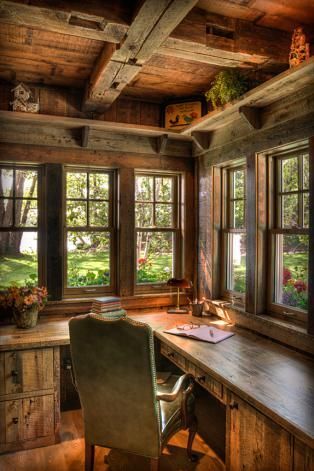
Isn’t this a gorgeous image? (Thank you Pinterest) I mean – who couldn’t write the great American novel in this set-up? Tranquility, surrounded by beauty and birdsong…. Sadly most writers don’t have this at their disposal. They squeeze writing in between full time employment, child care, grocery trips, laundry, cooking and the daily natural disasters that occur in the human life. Rarely do writers, particularly budding ones, get the time and space to write without interruption. Life beckons and writing takes a backseat – even when we have the motivation and desire to write.
I didn’t start my writing practice with real intention until I was forced to reckon with something bigger than me – cancer. I had hours on my hands when I had little to no energy. I was in my head, spiraling. Writing was a way out of that murky place. And now four years later I make time to write nearly everyday… even if it’s just a snippet of editing or diving into another contest prompt. Once I got the writing bug, I was infected. No cure…
Writing a novel length story was an undertaking I had no concept of when I started writing The Call. In the beginning an image came to me. Waking on a rooftop in the Comoros Islands with the call to prayer echoing around me… I started writing… and the story unfolded and unfolded and took a few side turns and kept going… and on and on. Over the course of months, it took on a life of its own. Before I knew it, I had over 160,000 words, roughly 230 pages. I submitted sections to my writing classes and got excellent feedback. But they’d only see 1500-2000 words at a time. They could offer suggestions on snippets, but couldn’t help with the bigger picture issues.
Because I had no idea what to do with it at this point, I took a break. I began writing other things – flash fiction or short stories for writing contests or class assignments. I wrote and edited… on and on….learning more of the writing craft.
I also read a lot. I’ve always been a bookworm, but I made an effort to read a greater diversity of genres. I can read chick lit with the best of them. But I knew I needed to dive deeper – to understand why some writer’s could bring me to the verge of an emotional breakdown, ie. Jesmyn Ward, Maurice Carlos Ruffin, Octavia Butler, Ta Nehisi Coates, Barbara Kingsolver, Peter Heller, Adiche Chimandoze, Colston Whitehead, Yaa Gyasi, Lauren Groff, Cormac McCarthy, Laura Hillenbrand, Ron Rash, Isabel Allende, David Joy, Pam Houston, Tommy Orange…. Fiction, non-fiction, natural history, historical fiction, social commentary, memoir, futuristic fiction… I read and read. I gravitated towards some authors and steered clear of others. Not sure why some books, or some authors spoke to me more than others.
What I realize now is that, whether I liked the characters they’d created or not, I appreciated their ability to make those characters relatable in some way. Even the bad guys were compelling. And conflict… the need for conflict to keep the story moving forward. I started to figure out why certain books sung to me.
And I started thinking about my novel again. If I wanted to pursue publication, what would that look like? I sent my manuscript out to a few literary agents, after pouring through the pages of Poets and Writers and researching a multitude of websites. Shockingly no one jumped on my novel… Nope… Random House, Penguin, Simon and Schuster… nothing. A few tersely worded rejections and my fantasy was jerked back into the realm of reality.

I considered self publication… Amazon and so many other options.
Reality check again – I have no idea what I’m doing. If I’m going to publish a book – especially my first book – well, I want it to be good… not just a vanity publication. I looked into hybrid publishing – which I’m sure is considered vanity publishing by some folks. The advantage is that I own my work. 100% The other advantage was the chance to work with a team to learn the process of publication and marketing and most importantly, how to edit a book into its best form.
My Developmental Editor was wonderful. Her first question to me – “What’s your goal? Is it to get your book published for the sake of being published? Or do you want to dive into the craft of writing a book? She looked at the story arc and pointed out inconsistencies and places where I meandered. I meandered a lot. In the beginning I had too many storylines… confusing the overall sense of plot. As a new writer – I couldn’t see that. A few meanders are okay… but my story veered off-road too many times, twisting and strewn with wildflowers. Some parts were pretty to read, but overall, it was hard to decipher where the story was going… and why.
I was given focus questions.
- Whose story are you telling?
- What story are you telling?
I learned about narrative structure, character development, continuity, energy and story arc. I understood some of these things to some degree but not in regards to writing a novel length story. I was asked to determine which storylines moved the story forward. What extraneous storylines could be culled? What characters were absolutely essential to the story?
During that first meeting, I learned a lot. It was terrifying. But my editor checked in to see how I was feeling about the process. In the end, her suggestions reshaped the book. It’s a different book than what I first began with. It’s better… tighter and more coherent. And I got to keep the things I loved in my first few versions… even if paired down. Now I feel comfortable sharing it with a wider audience.
If you’re starting out – have an idea for a novel or a collection of short stories, a memoir… I suggest do all the writing you can beforehand. You can’t edit what’s not written. In The Call, I hadn’t fully discovered who Juliette was. She was problematic and a bit of a mystery. I kept diving into her backstory as a way to show her. But the flashbacks muddled the narrative – making the reading experience jarring. I initially wrote one Nate chapter and then a chapter about Juliette from the past, interspersing them. And I head-bopped. I jumped POV’s in every chapter, with no consistency. That’s when I learned about the importance of narrative structure. With editorial guidance I created a current day Juliette to intersperse with Nate – which was clearer and less chaotic.
My book may not be a big seller. It may only be read by a handful of friends and family who are gifted a copy, but that’s okay. This is my first book. I’ve got at least 3-4 more in me. Likely more because everyday I find things I’d like to write about. I’m just glad I chose to spend my energy on the editing process. Even though my story may not be a blockbuster novel, I’m relieved to know that I put the best work out there… and I continue to work toward better writing everyday.
 Wildflowers Press